
Learning English has never been more accessible than it is today. With just a smartphone, learners can access hundreds of language-learning apps. However, if your goal is to speak English fluently and confidently in real-life situations, the real question is no longer: "Which app should I use to learn English?"
Instead, it becomes: "Which app can actually help me speak English?"
In this article, we'll explore what makes an effective English speaking app, discuss the limitations of many popular platforms, and examine whether Chamate deserves a place among the best options available today.
What Makes a Great English Speaking App?
Many learners spend years studying English but still struggle when it comes to speaking.
The problem is often not a lack of vocabulary or grammar knowledge. More often, it's a lack of speaking practice.
A truly effective speaking app should meet at least four essential criteria.
1. It Gives You Plenty of Opportunities to Speak
Speaking is a skill that cannot be developed through reading or multiple-choice exercises alone.
You need to speak regularly, make mistakes, receive feedback, and repeat the process consistently.
2. It Provides Immediate Feedback
If you consistently make pronunciation or grammar mistakes without realizing it, those mistakes can quickly become habits.
A good app should help learners identify and correct errors as they practice.
3. It Creates Natural Conversations
Many language-learning apps turn English into a series of exercises.
Real communication, however, involves discussing work, hobbies, daily life, emotions, and personal experiences.
An effective speaking platform should feel more like a conversation than a lesson.
4. It Keeps Learners Motivated
Studying English for a week is easy.
Staying committed for months is the real challenge.
A successful app should make practice enjoyable enough that learners want to return every day.
The Limitations of Many English Speaking Apps
Most speaking-focused apps on the market fall into one of two categories.
Vocabulary and Grammar-Based Apps
These apps are excellent for building a foundation.
However, many learners complete hundreds of lessons and still struggle to maintain even a simple conversation.
The reason is simple: they learn about the language rather than using the language.
Platforms That Connect You With Teachers
Learning with teachers can be highly effective, but it also comes with several drawbacks:
- Lessons can be expensive.
- Sessions often require advance scheduling.
- Suitable time slots may not always be available.
- Many learners feel nervous speaking with a real person.
How AI Is Changing English Speaking Practice
This is the gap that modern AI technology is beginning to fill.
Over the past few years, conversational AI has advanced dramatically.
Instead of following rigid scripts, modern AI systems can understand context, respond naturally, and maintain realistic conversations.
This has created an entirely new way to practice speaking English:
- No scheduling required
- No fear of making mistakes
- Available anytime, anywhere
- Virtually unlimited practice opportunities
What Makes Chamate Different?
As a result, AI-powered speaking apps are becoming increasingly popular among language learners worldwide.
Chamate is an English-speaking practice app that focuses almost entirely on conversational learning through AI.
Rather than overwhelming users with grammar lessons and vocabulary drills, Chamate emphasizes one thing above all else: speaking English every day.
Strengths of Chamate
1. Natural Voice Conversations
Users can speak directly with AI using voice instead of typing messages.
This creates a more realistic communication experience and helps learners develop practical speaking skills.
2. A Judgment-Free Learning Environment
One of the biggest barriers to speaking English is the fear of making mistakes.
With AI, learners can practice freely without feeling embarrassed or judged.
3. Multiple Proficiency Levels
Whether you're a beginner or an advanced learner, Chamate allows you to choose a level that matches your abilities.
The AI adjusts its vocabulary, sentence structures, and speaking style accordingly.
4. Bilingual Support
When learners don't know how to express something in English, they can combine English with their native language.
This keeps conversations flowing naturally and reduces frustration.
5. Practice Anytime, Anywhere
There's no need to schedule lessons or wait for a conversation partner.
You can start speaking whenever you have a few free minutes.
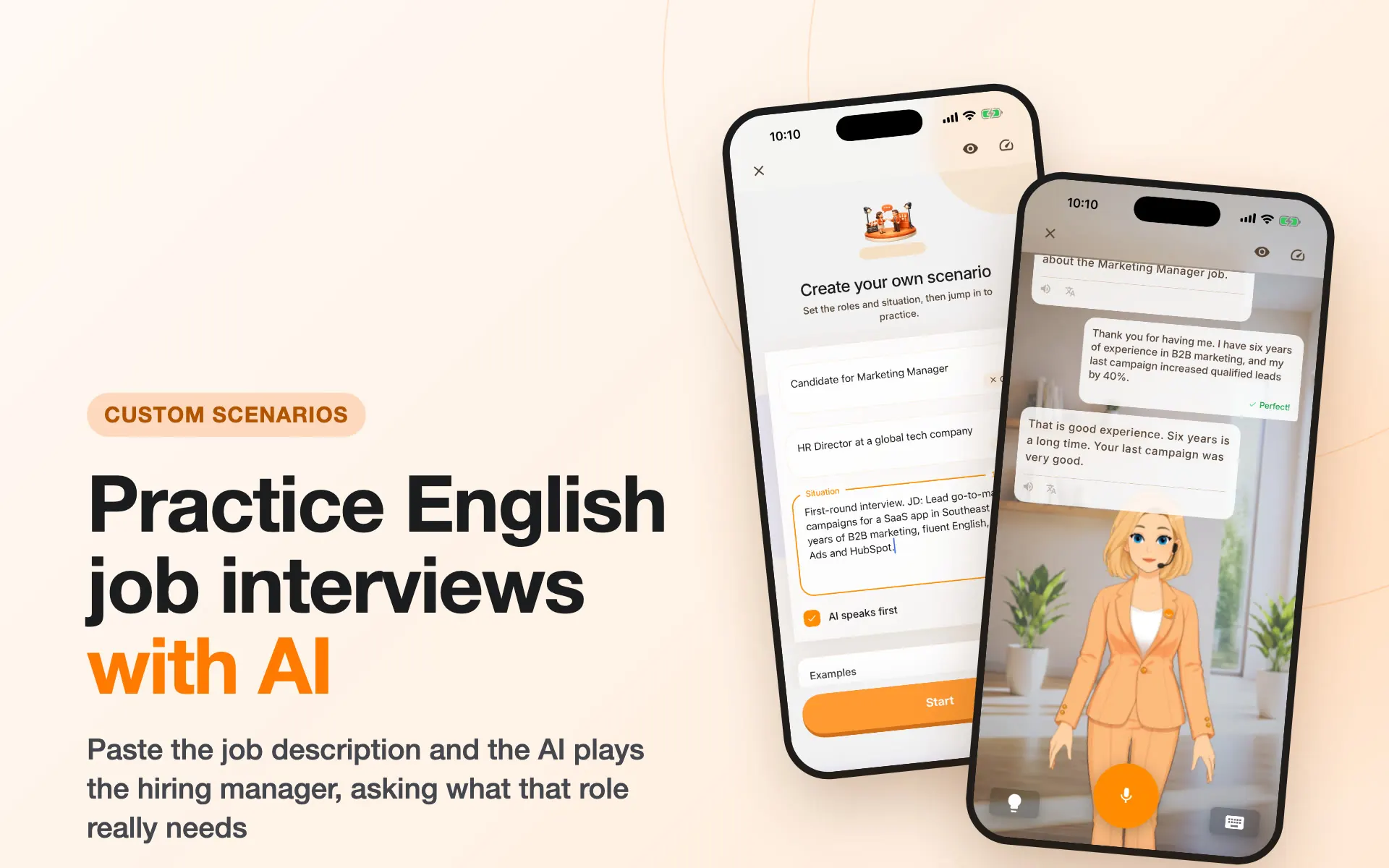
6. Custom AI Characters
One of Chamate's most unique features is the ability to interact with different AI personalities.
This variety makes speaking practice more engaging and helps prevent boredom.
The Weaknesses of Chamate
To provide a balanced evaluation, it's important to acknowledge that Chamate also has some limitations.
1. AI Cannot Fully Replace Human Interaction
Although AI conversations have become remarkably realistic, they are still different from real-world communication.
Whenever possible, learners should combine AI practice with conversations involving real people.
2. Success Depends on Self-Discipline
Like any self-learning tool, results depend heavily on consistency.
No app can significantly improve your speaking skills if you only use it occasionally.
3. Limited Social Pressure
In real life, speaking English often involves dealing with nervousness, uncertainty, and social expectations.
AI can help build confidence, but it cannot completely replicate these psychological factors.
So, What Is the Best English Speaking Practice App?
The answer ultimately depends on your goals.
If you want a structured program focused on vocabulary and grammar, there are many excellent options available.
If you prefer learning with professional teachers, online tutoring platforms remain a strong choice.
However, if your primary goal is to maximize speaking practice, improve fluency, and build confidence through daily conversations, Chamate is one of the most compelling options available today.
There is no single app that is perfect for everyone.
However, as AI continues to transform language learning, platforms focused on real communication are proving increasingly valuable.
Chamate doesn't aim to turn learners into grammar experts. Instead, it focuses on something far more important for most people: helping them feel comfortable speaking English in everyday situations.
And ultimately, that's exactly what many English learners are looking for.