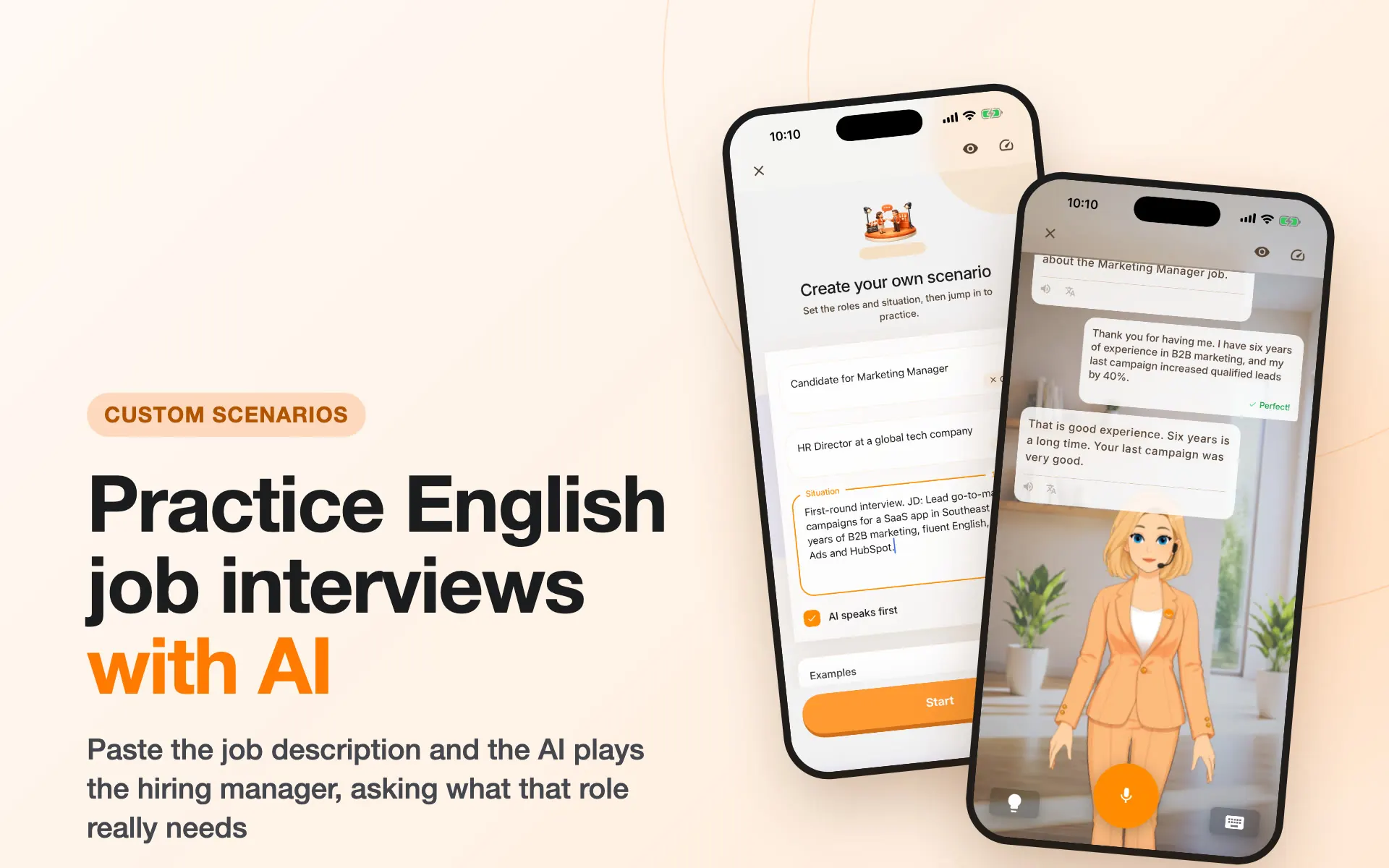

For many English learners, the biggest frustration isn't grammar or vocabulary, it's speaking.
You may have spent years studying English in school, memorizing thousands of words, and completing countless exercises. Yet when it's time to join a conversation, introduce yourself, or speak with a native speaker, the words simply don't come out.
The good news is that learning to speak English has become much easier thanks to AI.
Today, you can practice English speaking with AI anytime, anywhere, without booking lessons or finding a language partner. Even better, you don't need hours of study every day. Just 15 focused minutes can make a noticeable difference over time.
In this guide, you'll learn how to use AI effectively to improve your speaking skills, build confidence, and develop natural English conversation habits.
Why Do So Many People Study English for Years but Still Struggle to Speak?
Most learners don't have a knowledge problem, they have a practice problem.
Traditional English education often focuses heavily on:
- Grammar rules
- Reading comprehension
- Vocabulary memorization
- Written exercises
While these skills are important, they don't automatically translate into speaking ability.
Speaking is a practical skill. Like learning to drive or play an instrument, it improves through repetition and real-world use.
Many learners also face common obstacles:
- Fear of making mistakes
- Lack of speaking partners
- Limited opportunities to practice
- Anxiety when speaking in public
As a result, they understand English much better than they can actually speak it.
This is where AI-powered language learning can help bridge the gap.
How Can AI Help You Improve Your Speaking Skills?
AI has transformed language learning by making speaking practice accessible to everyone.
1. Practice Anytime You Want
Unlike tutors or language exchange partners, AI is available 24/7.
Whether it's early in the morning, during a lunch break, or before bed, you can start a conversation instantly.
2. Speak Without Fear of Judgment
Many learners hesitate because they're afraid of sounding awkward or making grammatical mistakes.
AI removes that pressure.
You can make mistakes, repeat sentences, pause to think, and practice as many times as you want without feeling embarrassed.
3. Build Consistent Speaking Habits
Consistency is one of the most important factors in language learning.
AI makes it easy to practice every day, even if you only have a few minutes available.
4. Receive Immediate Feedback
Modern English conversation AI tools can often identify grammar mistakes, detect pronunciation issues, suggest more natural expressions, and introduce useful vocabulary in context.
This instant feedback helps learners improve faster than practicing alone.
A Simple 15-Minute Daily Speaking Routine
The key isn't studying longer, it's practicing smarter.
Here's a practical routine that many learners can follow every day.
Minutes 1–3: Warm Up with Simple Questions
Start with familiar topics.
For example: How was your day? What are your plans this weekend? What did you do yesterday? What are you working on right now?
The goal is to switch your brain into "English mode" before moving into longer conversations.
Minutes 4–10: Have a Real Conversation with AI
Choose one topic and discuss it in depth.
Popular topics include travel, work, technology, movies and TV shows, fitness, personal goals, and daily life.
Try to avoid one-word answers.
Instead of saying: "Yes."
Expand your response: "Yes, I agree because it saves time and makes daily tasks more convenient."
Longer answers force you to think in English and develop stronger speaking habits.
Minutes 11–13: Review Your Mistakes
After the conversation, identify recurring issues.
Pay attention to pronunciation errors, grammar patterns, missing vocabulary, and unnatural sentence structures.
Keep a short list of mistakes that appear frequently.
Minutes 14–15: Repeat Correct Sentences
Take corrected sentences and say them out loud several times.
This step is often overlooked, but it's one of the most effective ways to improve fluency and speaking confidence.
The more often you repeat natural sentence patterns, the faster they become automatic.
Common Mistakes English Learners Make When Speaking
Focusing Too Much on Individual Words
Many learners spend years collecting vocabulary.
However, fluent speakers don't think in isolated words, they think in phrases and sentence patterns.
Instead of learning: decision
Learn: make a decision
Instead of learning: advice
Learn: give advice
Learning chunks of language makes speaking much smoother.
Trying to Be Grammatically Perfect
Perfection slows down communication.
Many learners mentally check grammar before every sentence, which creates hesitation and reduces fluency.
Communication should come first.
Accuracy improves naturally through consistent practice.
Practicing Input but Not Output
Watching videos, listening to podcasts, and reading articles are valuable.
However, speaking improves only when you actually speak.
Input builds knowledge.
Output builds fluency.
You need both.
Practicing Inconsistently
One hour of speaking practice once a week is usually less effective than 15 minutes every day.
Small daily sessions create momentum and help your brain retain language patterns more effectively.
Should You Practice with AI or Real People?
The answer isn't AI or humans.
The best approach is AI and humans.
When AI Is the Better Choice
AI is ideal if you:
- Are a beginner
- Need daily speaking practice
- Have a busy schedule
- Feel nervous speaking with others
- Want unlimited conversation opportunities
When Human Conversations Matter More
Speaking with real people helps you:
- Understand emotions and social cues
- Adapt to different accents
- Experience natural conversation flow
- Prepare for interviews, meetings, and real-life situations
The Most Effective Strategy
Use AI to build consistency.
Use real conversations to test your skills.
Together, they create a powerful learning system that accelerates speaking progress.
Final Thoughts
If your goal is to speak English more confidently, you don't need complicated study plans or several hours of practice every day.
What you need is regular, meaningful conversation.
AI makes that possible.
By spending just 15 minutes a day practicing English speaking with AI, you can gradually improve fluency, strengthen your speaking confidence, and develop faster English reflexes.
The most important step is simply getting started.
Open an AI conversation, start speaking, and make it a daily habit.
A year from now, you'll be glad you did.